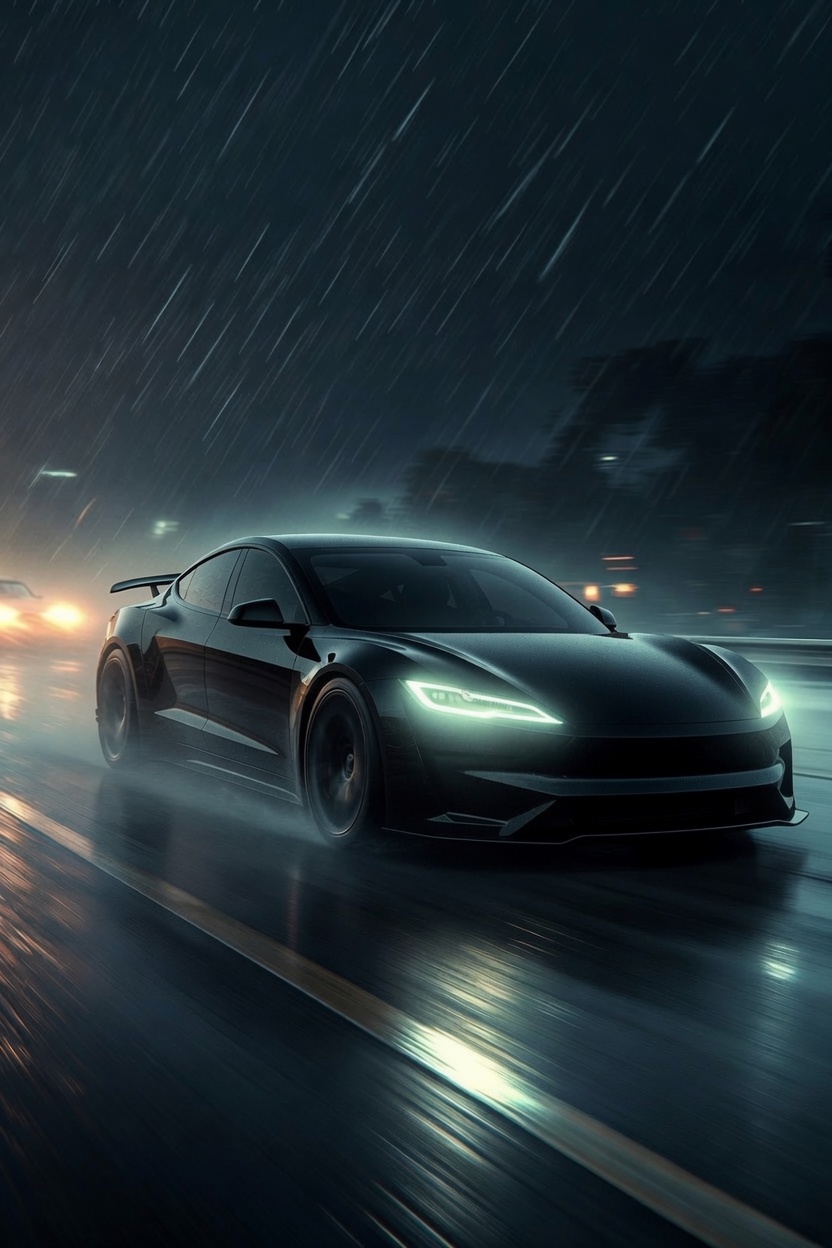
Chapter 1: The Condition
People still ask me why I got in the car.
I tell them I was broke and my dead father knew it. That covers most of it. The rest took me fifteen hundred miles to figure out, and I'm still not sure I have it right.
It started in a lawyer's office on the fortieth floor of a building in the Loop, three weeks after Ray's funeral. No windows. Whatever view you're paying for at that height, Henderson's clients weren't the ones getting it. He sat behind a big desk with a folder in front of him.
"Your father was a meticulous man, Mr. Doyle. I think we can agree on that."
I looked at my hands instead of answering. There's a gray stain electrical grease leaves in the cuticles that doesn't scrub out. Ten minutes in that room and I already knew my hourly rate and Henderson's were not the same species.
"He was a lot of things," I said. "Meticulous wasn't the word I used most."
Henderson didn't smile. He tapped the folder. "The estate is substantial. More than most people would guess for a validation contractor. But he was very specific about how it gets released."
I needed the money. I'm not going to dress that up. My divorce was finalized six months earlier and took the savings with it. I was three months behind on shop rent. Four in the morning, wide awake, running the same arithmetic while the L rattled past, getting the same answer.
So when Henderson said "specific," I heard "strings." And I already knew I'd take the deal.
Ray would have known it too.
"Tell me the number and where I sign," I said. "I've got a job in Lincoln Park at two."
"It isn't a matter of signing. Not yet. There's a condition. One requirement, and it's non-negotiable. Complete it, and the estate releases to you and your sister in full."
"What kind of condition?"
He slid a single sheet across the desk. Not a legal document. A page of instructions in a plain printed font, like something out of a manual. I don't remember the exact wording anymore. I remember the word "personally," because it was underlined.
"Your father owned a vehicle," Henderson said. "A Kestrel Model 9. It's in a private garage in the West Loop. The condition is that you take possession of it and drive it, personally, from Chicago to an address in Miami. When the car is delivered and the keys are handed over, the estate releases."
I read the sheet twice.
Miami. Fifteen hundred miles. Thirty hours of driving if nothing went wrong, in November, through weather that could flip from rain to sleet inside a county line.
"He's been dead three weeks," I said, "and he's still telling me what to do with my time."
"He wanted you to see the country, as he put it, through the windshield of a proper machine. He even specified the route. The car's navigation handles that."
"Why can't I put it on a flatbed? I can have a transport pick it up tonight. It's in Miami by Thursday."
Henderson shook his head. "The language is explicit. Personally drive. The vehicle's telemetry logs the driver. If anyone else is behind the wheel, or if it's moved by carrier, the estate forfeits to a list of charitable foundations. Your sister has been informed. She's eager for you to comply."
I bet she was. Casey was the one who'd stayed. She'd taken the late-night calls when Ray was chasing some validation error at the plant. She'd handled the funeral while I stood at the back of the chapel like a guy who'd wandered in off the street.
"The address?"
He pointed to the bottom of the sheet. "1422 Brickell Avenue. A private residence. The recipient isn't named. The car will recognize the location."
I thought about the bills on my kitchen table. The landlord who was done hearing about temporary cash-flow problems.
There wasn't a decision to make. Ray had known exactly how much pressure it took to close this circuit, and he'd applied exactly that much.
"Fine. Where are the keys?"
Henderson took a fob out of the drawer and set it between us. Small, heavy, blacked out, no branding except a K pressed into one side. I picked it up. Cold. Not a single button on it.
I left without shaking his hand.
Down on the street the wind was coming off the lake and funneling between the buildings, that late-fall Chicago cold that gets into the seams of your jacket. I called Casey from the corner of Wacker and Wells. She picked up on the first ring.
"Did you do it? Did you actually --- okay, first, are you mad? You sound mad. Did you talk to Henderson?"
"I talked to him. I've got the fob."
"Oh thank god. Matt, I know, okay? I know he's being --- even dead he's being Dad about it. But we need this. I've been going through his files and there's debt we didn't know about, there's --- the house, Matt. This is how we keep the house."
A Brown Line train screamed over the intersection. I waited it out.
"He's making me drive it to Miami, Case. Personally. It's a setup. One last lesson from the grave."
"So let him teach it. Drive the car. It's a beautiful car, he loved that --- he spent more time in that garage the last three months than in his own bed. Drive it and come home rich. Well. Less broke."
"I'm heading there now. I'll call you when I'm out of the city."
"Be careful. And Matt --- don't take it apart. I know you. Don't pull a panel off to see why it does something. Just drive."
She knew me.
I hung up and walked west.
The garage was a concrete box tucked under a bridge in the West Loop. No sign. A steel door and a keypad that belonged on a clean room. I punched in Henderson's code and the door slid sideways, quiet as a drawer.
Inside, the air was still. Tires and ozone.
One bay, clean enough to do surgery in. One light. The car sat under it.
Gloss black, paint so deep it looked wet. No chrome, no badges, windows tinted to nothing. I walked around it once. My boots were the loudest sound in the room.
Ray had spent his career validating Kestrel's autonomy software. Making sure the code didn't put a car into a bridge abutment because it mistook a shadow for a wall. The Model 9 was their flagship. Supposedly the smartest machine on four wheels.
The car picked up the fob before I touched anything. The handles slid out of the body. The mirrors unfolded on their own.
I opened the driver's door and got the smell of new leather and hot electronics.
And I saw the box.
It was on the passenger seat. Cardboard, taped shut. On the lid, in black marker, in handwriting I hadn't seen in five years:
For Matt.
I got in. The seat bolsters moved and took hold of my ribs, the car taking my measurements. The dash was one unbroken sweep of dark glass. No knobs, no switches, nothing to put a hand on.
I sat there a minute with my hands on the wheel.
Ray died in a car like this one. The papers called it an accident. I'd seen photos of the wreck. I'd signed for what came out of it.
I made myself stop thinking about that.
I reached for the box.
The speakers came on before I touched it.
"Hello, Matt."
Ray's voice. His actual voice: the dry rasp, the pause before my name.
"I figured you'd be the one to come for the car. I'm glad you did. There's a lot we need to talk about, and the road to Miami is long enough to cover most of it."
End of preview
Thank you for reading.